


The True Cost of Technical Debt
Every line of code you write today that takes a shortcut is a loan against your future. Here is how to calculate the interest rate.
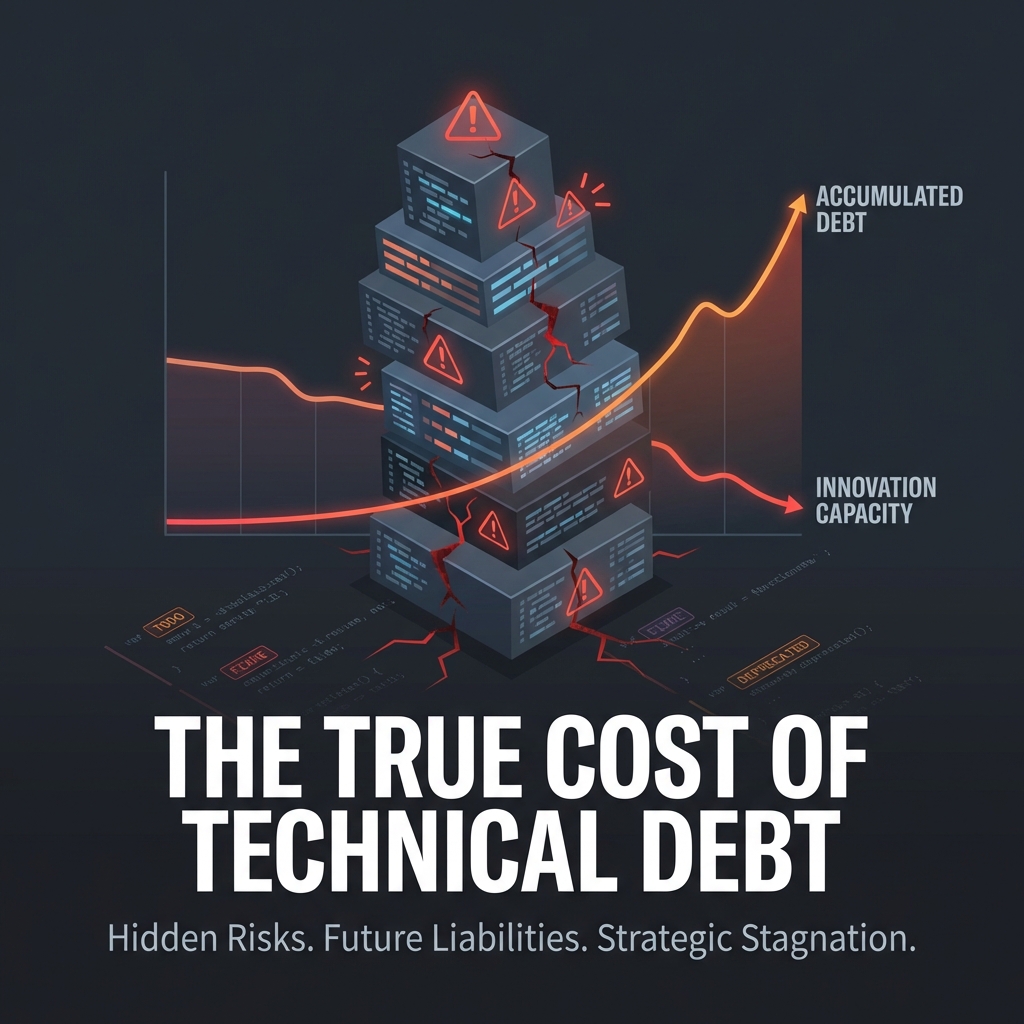
Stakeholders often think of code as an asset, like a building. Once it’s built, it’s done. But code is more like a garden. If you stop weeding it, the weeds take over, and eventually, you can’t even find the vegetables.
The Financial Analogy
Ward Cunningham coined the metaphor “Technical Debt” to explain refactoring to financial stakeholders. It goes like this:
- Principal: The quick-and-dirty code you shipped to meet a deadline.
- Interest: The extra time you spend working around that code every time you add a new feature.
If you don’t pay down the principal (refactor), you eventually spend 100% of your time paying interest (fixing bugs caused by the bad code) and have zero capacity for new features (bankruptcy).
Cost of Delay (Compound Interest)
Bar: Ideal Velocity | Line: Reality with Debt
The Danger of Compound Interest
Technical debt compounds. When you have one hacky module, you write a hacky workaround in another module to talk to it. Now you have two hacks. Then a new developer joins, sees the hacks, and thinks “this is how we do things here.”
Within a year, your “velocity” drops from 10 features/month to 1 feature/month.
The “It works” Fallacy
Just because code “works” (passes QA) doesn’t mean it has value. If it is unmaintainable, it has negative value.
Our Repayment Strategy
At BADA Solutions, we enforce a strict 80/20 rule with our enterprise clients:
- 80% New Features: Delivering business value.
- 20% Refactoring: Paying down debt in the areas we touch.
This is the “Boy Scout Rule”: Leave the campground cleaner than you found it. If we touch a module to add a button, we also rename the confusing variables and add the missing unit test.